July 2, 2026
Have you ever wondered why a neighbor’s exterior paint looks pristine for years, while another home starts peeling after just a few months? While the quality of materials plays a crucial role, the secret often boils down to the environment on the day the job was completed. The conditions outside dramatically influence how paint adheres, dries, and cures. Whether you are aiming for a total transformation or a simple touch-up, environmental elements can literally make or break the final result. According to Workyard, globally, the paint and coating industry was valued at approximately $217.36 billion in 2024. With so much investment going into protecting properties, it is essential to get the application right. Understanding how atmospheric changes interact with exterior surfaces ensures your investment withstands the test of time. Let us explore how various environmental factors, particularly weather and humidity, directly impact the longevity and aesthetic appeal of your exterior paint finish.
Understanding the Role of Weather in Exterior Painting
When planning a home improvement project, checking the local forecast should be your very first step. Weather is not merely a background detail; it is a primary factor dictating how well your exterior paint job will perform over its lifetime. Paint requires specific conditions to transition smoothly from a liquid state to a durable, solid film. If atmospheric conditions are not ideal, this chemical transition gets disrupted. For instance, extreme fluctuations in sunlight, cloud cover, and wind speed can alter the drying timeline. Wind can blow dirt onto a wet wall, while intense sunlight can bake the top layer before the underlying liquid settles. Many painting companies understand that timing the project around ideal weather windows is just as important as the technique used. Receiving guidance from expert painting companies can help homeowners avoid disastrous results. They know exactly how to read a forecast to ensure the chosen products perform exactly as intended.
Combating High Humidity for a Flawless Finish
Humidity is often the invisible enemy of exterior renovations, especially in regions prone to thick, moisture-heavy air. When the air is saturated with water vapor, the moisture inside the paint struggles to evaporate. This evaporation process is necessary for the paint to dry and bond correctly to the siding or stucco. If the water cannot escape, the drying process stalls indefinitely. High humidity can lead to a condition known as surfactant leaching, where brown or white streaks appear as moisture pulls water-soluble ingredients out of the curing film. Furthermore, trapped moisture often results in bubbling and eventual peeling. Reputable painting companies often test the moisture content of the air and surfaces before ever opening a can. By relying on high-quality brands like Sherwin-Williams and Benjamin Moore, skilled professionals can mitigate some moisture issues, but even the best formulas require a controlled evaporation rate to achieve a flawless, long-lasting finish.
Navigating Temperature Extremes: Too Hot or Too Cold
The thermometer dictates much more than your comfort level when applying exterior colors. Temperature extremes pose massive risks to the integrity of a fresh coat. If the temperature drops too low, the application thickens and refuses to spread evenly, leading to thick clumps and poor adhesion. Cold temperatures also slow down the curing phase so severely that dew or frost might form on the surface before it dries, ruining the sheen. On the opposite end of the spectrum, extreme heat is equally problematic. When the sun is beating down on a wall, the exterior surface temperature can be significantly higher than the ambient air temperature. This causes the liquid to dry too quickly, preventing it from penetrating porous surfaces. Without proper penetration, the finish is prone to cracking. Professional painting companies monitor both ambient air temperatures and surface temperatures throughout the day to ensure optimal bonding and a perfectly smooth outcome.
Managing the Impact of Rain and Moisture
It goes without saying that rain and fresh exterior paint are a disastrous combination. However, the threat of moisture extends beyond an active downpour. Surfaces must be entirely dry before any application begins, which means accounting for morning dew, recent storms, and even the proximity of sprinklers. If wood or masonry absorbs water, painting over it traps that moisture inside. Eventually, the sun will heat the exterior, causing the trapped water to turn into vapor and expand. This expansion violently pushes the new layer of paint away from the wall, causing massive sheets of peeling. Experienced painting companies watch the skies meticulously and leave ample buffer time after a rainstorm to guarantee the siding is bone dry. Additionally, they ensure no rain is scheduled for at least twenty-four hours after the final coat is applied. This strict attention to moisture management separates a messy job from a durable exterior painting service.
Prioritizing Prep Work in Regional Climates
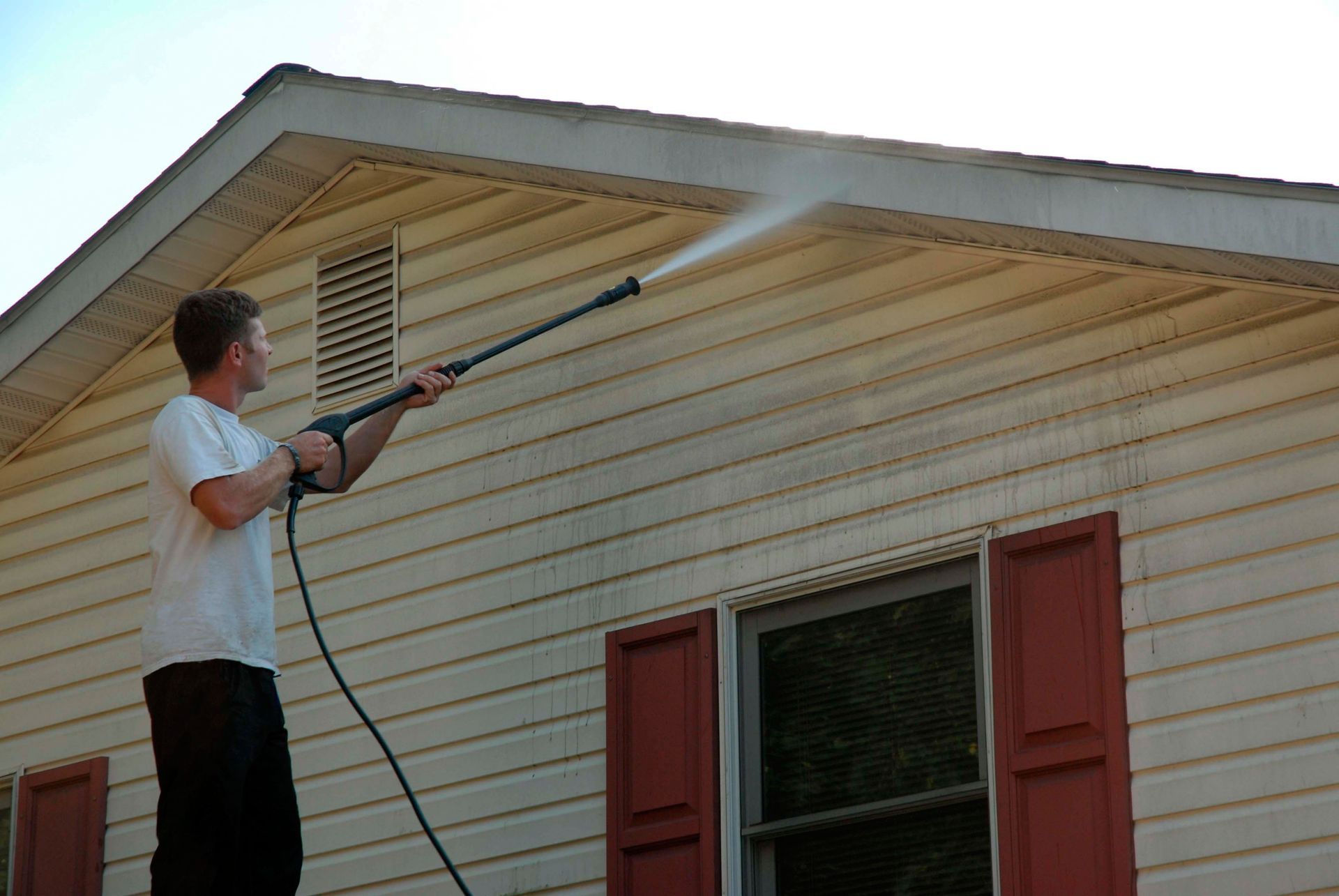
Before worrying about the sky, one must look at the wall itself. Weather and humidity do not just affect the day of the job; they contribute to the long-term buildup of mold, mildew, algae, and dirt on your home’s exterior. In humid areas, green algae and dark mildew streaks are incredibly common. Painting directly over these contaminants guarantees failure, as the coating will stick to the grime rather than the siding. Top-tier painting companies incorporate comprehensive cleaning processes before they even consider picking up a brush. Utilizing residential pressure washing services and soft washing services is a mandatory preparatory step. Soft washing is particularly vital for delicate siding, using specialized solutions to eradicate biological growth without causing damage. Once the exterior is completely sanitized and the organic matter removed, the surface must dry thoroughly. Proper prep work using professional power washing guarantees that high-end finishes lock securely onto the home.
Finding the Right Time to Paint
Navigating the complex interplay of humidity, temperature, and moisture requires patience and strategic scheduling. The ideal conditions generally involve mild temperatures, low relative humidity, and a light breeze to facilitate even evaporation. Depending on the season and the local climate, the window of opportunity might be limited to specific times of the year or particular times of the day. For example, painting the west-facing side of a house in the early morning prevents the afternoon sun from flash-drying the application. Local painting companies schedule their workflows to chase the shade, moving around the property to maintain optimal surface temperatures. Most painting companies recommend booking exterior painting services during milder transitional seasons, though highly experienced crews adapt to varying daily conditions. By tracking weather patterns and utilizing their deep understanding of product behavior, professionals ensure that your residential painting services or commercial painting services are executed under the safest environmental circumstances.
Achieving a flawless, enduring exterior finish is a delicate science that relies heavily on cooperating with Mother Nature. Every factor, from the ambient humidity to the surface temperature of your siding, plays a monumental role in the curing and bonding process. Overlooking these environmental variables often leads to blistering, poor adhesion, and an expensive need for a total redo long before you should ever have to worry about it again. Investing in quality products and meticulous preparation, such as pressure washing, sets the foundation for success. By respecting atmospheric conditions and timing the application perfectly, you ensure your property remains beautifully protected against the elements for the long haul. When you are ready to revitalize your home or commercial space with confidence and precision, reach out to Gator Pressure Cleaning.